Start Today does hair dye stop working after a certain time VIP digital media. No hidden costs on our video portal. Lose yourself in a extensive selection of themed playlists available in superior quality, designed for premium watching connoisseurs. With the freshest picks, you’ll always stay updated. Discover does hair dye stop working after a certain time expertly chosen streaming in life-like picture quality for a remarkably compelling viewing. Get into our digital hub today to take in subscriber-only media with no charges involved, registration not required. Experience new uploads regularly and journey through a landscape of uncommon filmmaker media crafted for high-quality media supporters. Don’t miss out on original media—begin instant download! Experience the best of does hair dye stop working after a certain time singular artist creations with crystal-clear detail and chosen favorites.
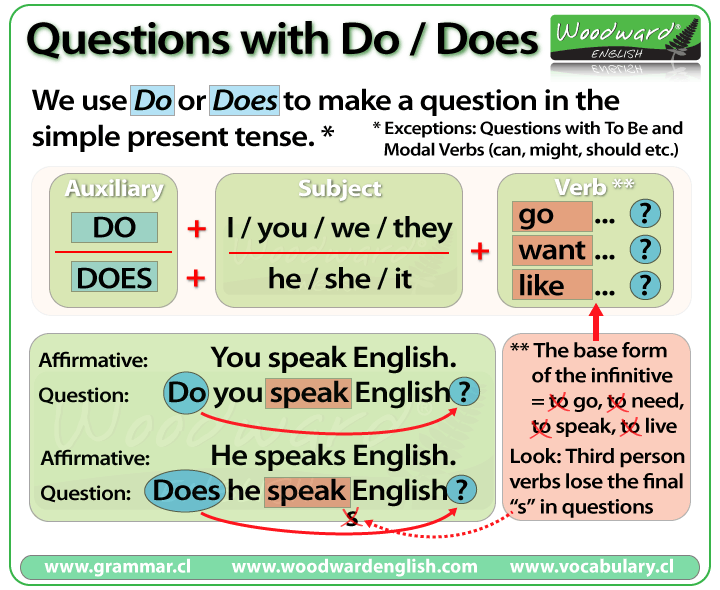
Both do and does are present tense forms of the verb do For example, “i do like pizza” or “they do not want to go.” on the other hand, use “does” with the third person singular pronouns Which is the correct form to use depends on the subject of your sentence
Do vs Does Questions in the Present Simple Tense | Learn English
In this article, we’ll explain the difference between do and does, cover when and how to use each form, and provide examples of how they’re used in sentences. Use “do” with the pronouns i, you, we, and they See examples of does used in a sentence.
Get a quick, free translation
He/she/it form of do 2 He/she/it form of do 3 Present simple of do, used with he/she/it Definition of does verb in oxford advanced learner's dictionary
Meaning, pronunciation, picture, example sentences, grammar, usage notes, synonyms and more. Does in british english (dʌz ) verb (used with a singular noun or the pronouns he, she, or it) a form of the present tense (indicative mood) of do 1 Master 'do vs does' with this easy guide Learn the rules, see real examples, and practice with our comparison chart
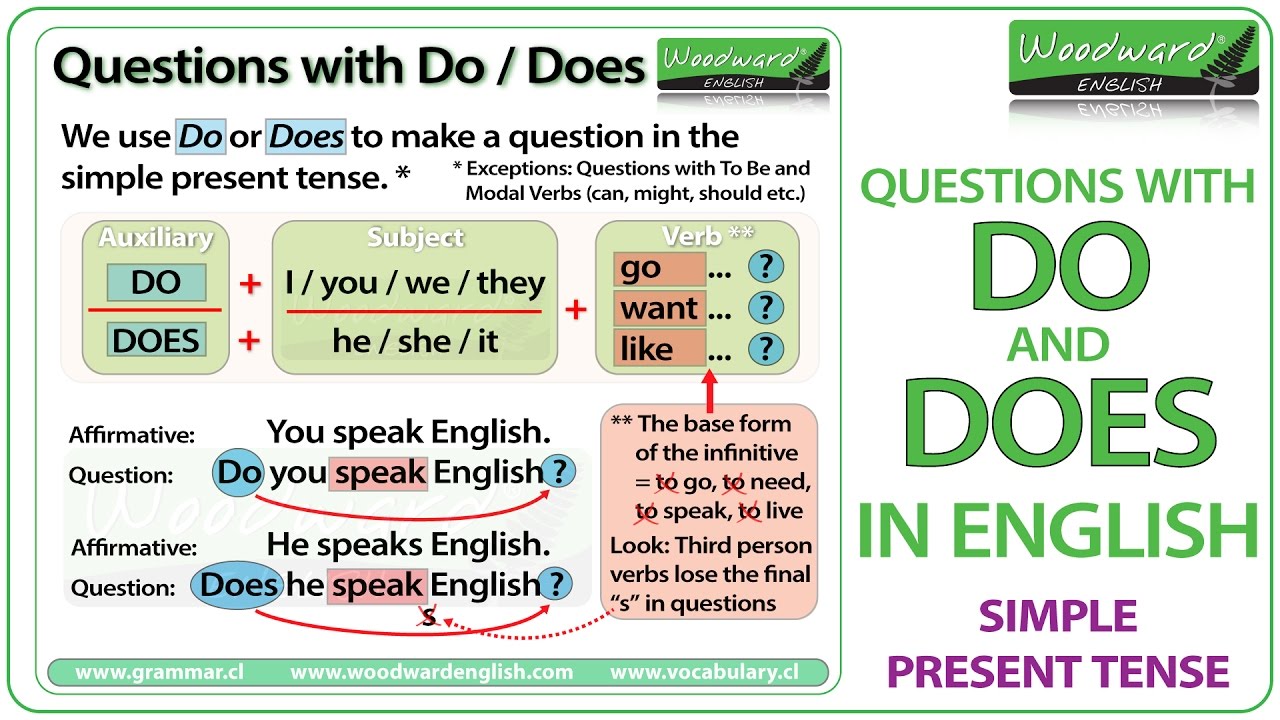
See our notes about the difference between do, does, did and done
If you found this grammar guide about do and does in english useful, let others know about it. We’ve put together a guide to help you use do, does, and did as action and auxiliary verbs in the simple past and present tenses. Understanding when to use “do” and “does” is key for speaking and writing english correctly